
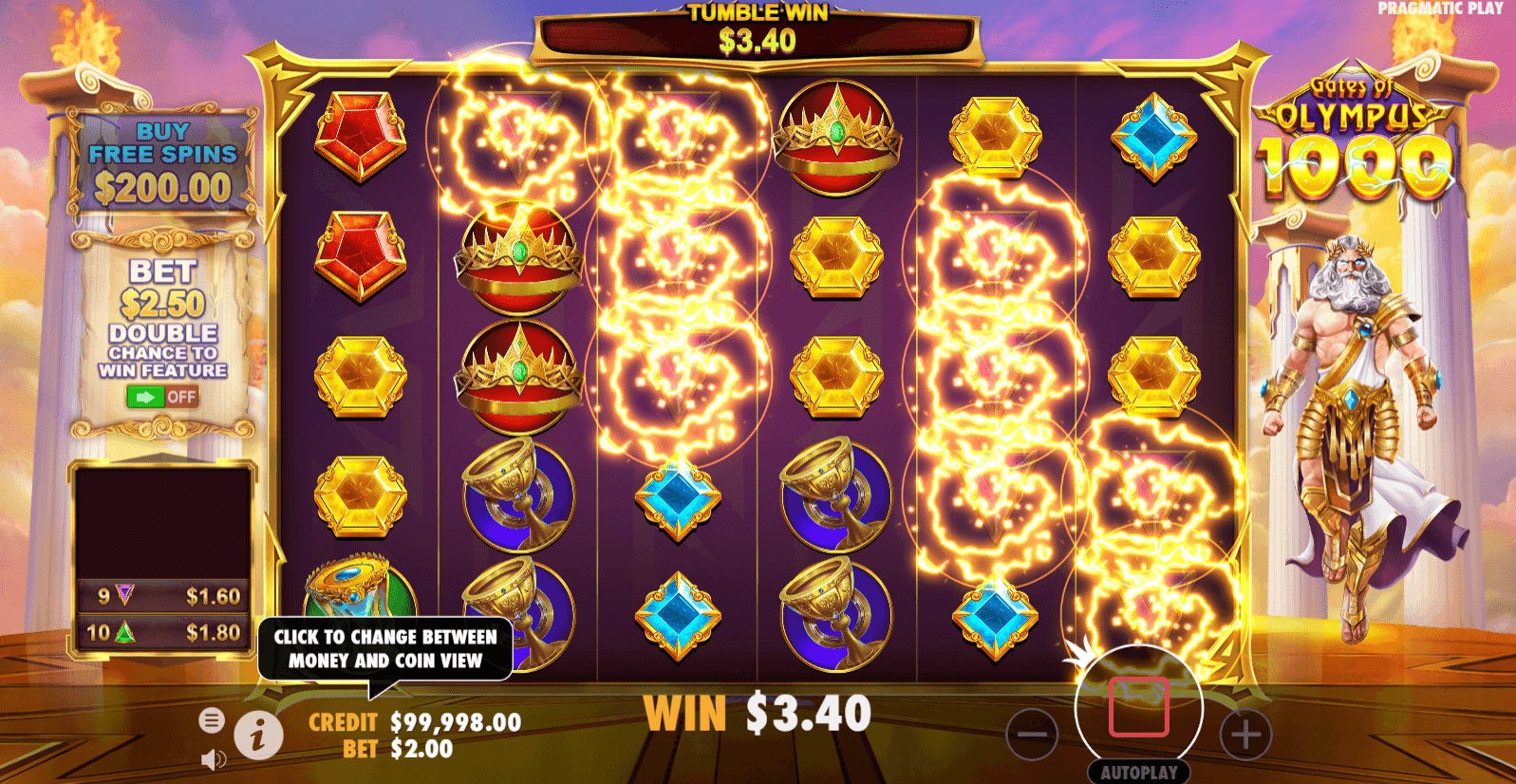





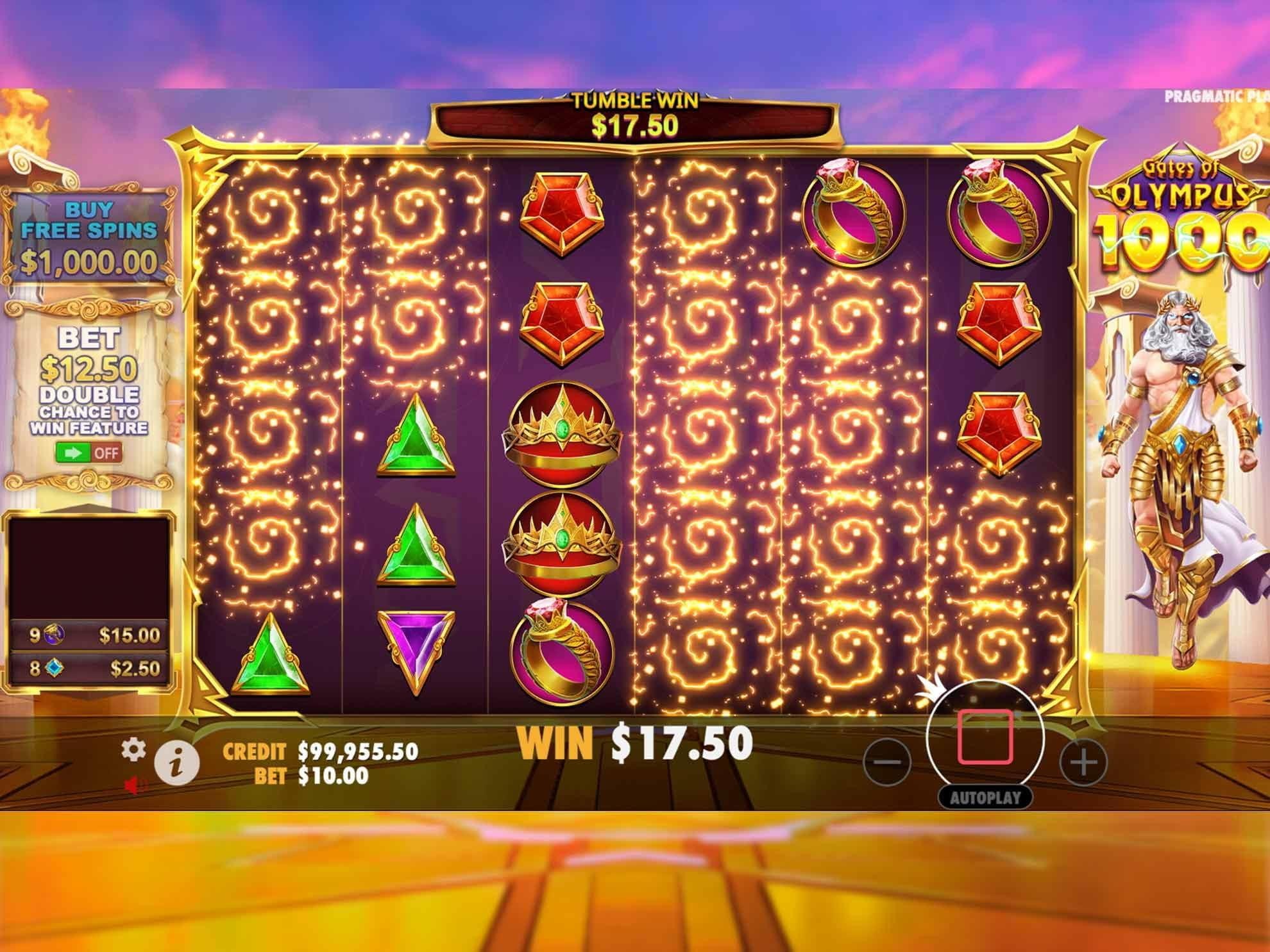
Gates of Olympus 1000

Gates Of Olympus 1000 Bonus

Test the rhythm, learn the features, and set clear limits before playing for money in Norway, without stress and without chasing losses - always 18+.

Gates of Olympus 1000 demo
maxwin image 1
Gates of Olympus 1000

Gates Of Olympus 1000 Big Win

Big wins are what make many open a session, but it's also what can draw you into bad choices if you don't have boundaries. Imagine sitting down with a cup of coffee and thinking "today's the day it's going to hit big", and then you start clicking faster when it's quiet. That's perfectly human, but that's also precisely when a plan makes the difference between entertainment and chasing losses.

Start by making “big” concrete. For some, it means doubling their stake back, for others, it means reaching a certain profit and quitting. Once you’ve defined what you’re truly satisfied with, it becomes easier to keep your effort stable and to take breaks when the session gets too intense. Fluctuations will come anyway – your job is to make them manageable.

A good first step is to divide the game into short blocks. Play an agreed series of rounds, stop, check your balance and mood, and decide again. That way, you don't let a moment of excitement control the rest of the evening. And remember: only play if you are 18+, and use available responsible gambling tools in Norway when you need them.

Gates of Olympus 1000

Top casinos for playing Gates of Olympus 1000 — current list

ALF Casino

ALF Casino

Mafia Casino

Mafia Casino

SG Casino

SG Casino

Retro Bet

Retro Bet

leovegas

LeoVegas

Gates of Olympus 1000

Max Win Gates Of Olympus 1000

Max payout sounds like a goal you can aim for, but in practice, it’s more a ceiling in the game design than a “plan.” Imagine you’ve seen clips of people hitting huge payouts, and you go in feeling like you just need to “play correctly.” The problem is that you can't control when the peaks come, but you can control how expensive it gets to wait for them.

Therefore, you should read max payout as a reminder of risk, not as a promise. If you choose a high stake level to reach a big moment faster, the session can become short and stressful. A calmer approach gives you more rounds, more time to learn the rhythm, and less pressure per spin. Many are surprised by how much better the experience becomes when you can actually tolerate things going a bit slow.

Make it practical: decide on a budget that doesn't affect your daily life, set a time limit, and include a non-negotiable stop point. Once you have these three in place, you can participate in the excitement without chasing. In Norway, it's especially important to keep it responsible: 18+ and with clear limits that you set before you become emotional.

Gates of Olympus 1000

Gates Of Olympus 1000 Maxwin

This section is about how you can play with control when you know the fluctuations can be significant. Imagine you're playing on your mobile on the sofa, and everything is going well until you get a series of small losses. Then the thought comes: “I’ll adjust a little, just this once.” Right there, it's smart to have a system that means you don't have to improvise.

Think of the session as a small process: choose your stake, test the pace, decide on breaks, and have a plan for finishing. The clearer you make your choices before you start, the less you'll need to react along the way. It's a simple way to keep gaming as entertainment - not a project you have to “win back.”

How to Read the Game's Rhythm

The first thing you should do is learn the rhythm before you start hoping for anything special. Imagine you start with autospin right away and scroll on your phone while the rounds pass. Many do this, and afterwards they feel like the session just “disappeared.” Instead, play manually for the first few minutes, and notice how often you get small wins, how often it's completely quiet, and how your balance moves.

A simple test works well: keep the same stake for a fixed series of rounds and observe without changing anything. The point is not to get a specific feature, but to see if the pace suits you. If you notice you're becoming restless, it's often a sign that the session should be shorter or that the stake is too high for your mood.

Once you know the rhythm, you can choose how you want to continue playing. Some prefer short sessions with a clear start and end, others like longer sessions with low stakes. Both can work, as long as you don't let your emotions dictate your stake and duration in the moment.

Stake Choices That Give More Rounds

Your stake is the pace of your budget. Imagine you choose a level that only allows you a few minutes, and you feel that every round becomes “important.” Then you'll quickly be tempted to increase or top up, and that's rarely a good direction. Instead, choose a stake that gives you room for fluctuations, so you can keep a cool head when things are quiet.

A practical goal is to be able to play an agreed block without feeling the need to constantly adjust. If you have to change your stake because you become impatient, it's a signal that you should either play shorter or go down a notch. The calm you gain from lower pressure per round also makes it easier to stop when you've decided to stop.

And remember: more rounds doesn't mean you “deserve” a win. It just means you're giving yourself a better experience within your budget. That's a big difference.

Autospin can be useful if you use it as a tool, not as an autopilot. Imagine you start a long series and put your phone down, and then afterwards you realize you weren't really paying attention. That's often when people play longer than planned. If you want to use autospin, choose short series and stop between them.

A good habit is to check your balance and mood before starting a new series. If you notice irritation or haste, it's better to take a break than to keep pressing. Autospin should make the session tidier, not less conscious.

The stop point must be concrete, otherwise it's just a thought. Imagine saying “I'll stop if it gets too much,” and then you sit there negotiating with yourself when it actually does get too much. Instead, decide on your stop point beforehand: a time limit, a loss level, and preferably a rule for what you do if you go into profit.

A little trick is to formulate the stop point in your head as a sentence: “When the timer rings, I log out.” Or: “Once I've spent this amount, the session is over.” It's easier to follow a sentence than a feeling. When you end at a planned point, the next session will also be easier to start calmly.

maxwin image 2
Gates of Olympus 1000

Gates Of Olympus 1000 Bonus Buy

Some players like to jump straight to the most exciting part, others prefer to build the session gradually. Imagine you only have 15 minutes and think you want to “get straight to the action” instead of waiting for features to appear naturally. It's important to understand that buying features doesn't remove risk – it just changes when it arrives. You often exchange many small rounds for a more expensive 'package' with higher volatility.

To use this smartly, you need a clear plan for amounts and number of attempts. Without frameworks, it can become a spiral of “just one more”, because each purchase feels like a new starting point. In Norway, you should be extra consistent: 18+, and with limits that prevent you from 'correcting' based on emotions.

When Buying Features Makes Sense

It makes the most sense when you have a tight time window and want a more concentrated experience. Imagine you're on a break and don't want to spend the entire session building something up, but rather want to experience high excitement quickly. In that case, buying a feature might be suitable, as long as you treat it as a standalone activity with a clear stopping point.

You should also have tested the game first, so you know what you're buying. If you don't know the symbols, multipliers, and how the features work, the purchase becomes more like buying a surprise you don't understand. Start by learning the mechanics in calm rounds, and decide afterwards.

A simple rule: if you already feel stressed or irritated, don't buy anything. Purchases should be a conscious choice in a calm state, not a response to a bad period.

Budget Rules For High Risk

Buying features often requires a separate sub-budget. Imagine you've set aside an evening budget, and you start spending everything on expensive choices because you 'want to get it over with'. Then you lose the control that the budget was supposed to provide. Instead, set a separate limit for such choices, for example 'maximum two attempts tonight' or 'maximum a fixed sum'.

Stick to the same limit even if you have a good experience early on. It's easy to think you're playing 'with winnings', but it's still money in the session. When you lock the number of attempts in advance, you avoid improvising at the moment when the excitement is highest.

If you notice you want to increase because 'it must happen soon now', stop. That phrase is often a warning sign that you are about to chase.

The Alternative Many Overlook

Many forget that there is a calmer alternative: playing short blocks with low stakes and clear breaks. Imagine you actually want a pleasant evening but feel pressured to make the session 'exciting enough'. You can get excitement without expensive choices by controlling the tempo: play 30 rounds, stop, evaluate, and only continue if you still want to.

This alternative also gives you more learning. You see how the game behaves over time, and you notice faster when your mood changes. Many find that they make better decisions when they don't 'lock themselves into' big choices, but rather build the session with small, controlled steps.

Gates of Olympus 1000

Deposits, Withdrawals And Verification In Norway

Payment is often what determines whether a session feels orderly or troublesome. Imagine you've had a good evening and want to end, but you encounter an extra check or a pending status you didn't expect. It happens, and that's why you should plan payments and wrap-up before you get emotional. Only play 18+, and stick to platforms operating within relevant rules in Norway.

Think of this as a simple flow: choose a method, set limits, complete account steps early, and have a plan for withdrawals. When you do it in advance, you avoid dealing with practical matters precisely when you most want to be done.

Area

What You Should Check Before Starting

Why It Helps

Simple Step

Deposit

Confirmation and deposit limit

Reduces impulse and errors

Start with a low amount

Withdrawal

Order and minimum amount

Provides a more predictable ending

Stick to one request

Account

ID and basic information

Less friction when needed

Arrange it early

Security

Password and logout

Lower risk on mobile

Log out after the session

Choose Payment Method With Control

The best choice is often what makes it easy to stop, not just easy to deposit. Imagine it's too easy to top up, and you notice you can do it without thinking. That's a sign you need stricter limits. Start with a method you know and use it consistently at first.

Set a deposit limit before the first session. Once the limit is set, you don't have to 'be strong' in the moment. You just follow the framework you created while you were calm.

If you want to be extra tidy, stick to one deposit per session. This makes it easier to see what you actually spend, and makes it less tempting to 'patch up' with small amounts.

Withdrawals Without Unnecessary Surprises

Withdrawals often go best when you don't make many changes simultaneously. Imagine you send a request, get impatient, and try again with a different amount. Then you can create more chaos than you solve. Stick to one request at a time, and let the process complete before changing anything.

It's also smart to think of withdrawals as part of your stopping point. If you've decided to quit at a certain surplus, make it a concrete choice: stop, send a withdrawal request, and log out. That sequence ensures you don't 'keep playing while you wait'.

If you notice you're starting to get annoyed by waiting, take a break from playing. Annoyance is rarely a good advisor.

Verification And Privacy In Everyday Life

Account steps and document verification feel tedious, but it's easier to handle when you're not stressed. Imagine you want to end with a withdrawal, and then you discover you need to confirm details first. It always feels worse when you're mentally done. Therefore, complete account steps early, when you are still calm.

Take privacy seriously: use a strong password, lock your device, and avoid leaving your account logged in on shared devices. Small habits reduce the chance of problems, especially when playing on mobile.

If something is unclear, ask support immediately instead of guessing. It often saves you several rounds later.

How to Use Support Effectively

Support can be a shortcut if you articulate yourself concretely. Imagine writing “it’s not working” and getting a generic answer that doesn't hit the mark. Then you'll just get more irritated. Instead, write what you did, what you expected, and what you see now, with time and status message.

Keep communication short and tidy. When you get a response, make one change at a time, and test before doing more. This makes it easier to find what actually solved the problem and keeps your session calmer.
maxwin image 3

Responsible Gaming and Realistic Expectations

The most underrated tool is expectation management. Imagine starting a session to “get a great experience,” and you're disappointed when it doesn't happen quickly. Then many start to change their stakes and tempo, and that's often where control slips. Gaming is variance, and therefore your plan must be stronger than your mood.

Actively use responsible gaming tools: time limits, loss limits, deposit limits, and time-out if you notice you're repeating patterns. This isn't just for “problems”; it's to make gaming more enjoyable. In Norway, you should always stick to 18+, and only play when it feels like a conscious choice, not as pressure.

It also helps to have a shutdown routine. When you end in a planned way, it becomes easier to start next time without feeling like you “have to go back”.

How to End Your Session with Control

Ending should be a point, not a gradual transition. Imagine telling yourself you’ll stop soon, and then you never quite get there. Set a concrete end: hours, number of rounds, or a fixed amount. When the limit is reached, log out, regardless of whether you're in a flow state.

An effective habit is to take five minutes completely away from gaming after ending. Get up, drink water, do something else. That break disrupts the feeling that you “can just continue a little longer”. Many notice that the desire to continue weakens once they've broken the rhythm.

If you notice you're playing to chase losses, stop immediately. It's one of the clearest warning signs, and that's exactly when a time-out can be a good decision.

FAQ

How can I test the game without getting carried away?

Set a timer and play in short blocks with the same stake, so you actually see the rhythm. Take a break between blocks and ask yourself if you're still following the plan. When the timer rings, stop and log out, even if you feel like “just a little more”.

What is a smart stopping point for a short evening session?

Choose one clear limit: either time or a maximum loss you can tolerate. Many succeed best when they combine 20-30 minutes with a fixed budget and decide that there will be no top-ups that evening. This way, you avoid negotiating with yourself along the way.

When should I avoid buying features?

Avoid it when you are irritated, impatient, or trying to chase losses. It then becomes easy to make expensive choices based on emotion and lose control over your budget. It should be a calm, planned choice with a fixed number of attempts, not an impulse.

How do I choose my stake level without chasing big moments?

Choose a stake that gives you many rounds within your budget, and keep it stable long enough to understand the fluctuations. If you notice yourself checking your balance after every spin or feeling the urge to increase “just to get things going,” your stake is probably too high for your plan.

What do I do if a withdrawal or payment gets a pending status?

Do not start many new attempts in panic and do not change details while a process is ongoing. Note the time, amount, and status message, and contact support with a brief explanation of what you did and what you see. Take a break from playing while you wait, especially if you feel frustrated.

Which responsible gaming tools are most effective in Norway?

Time limits and deposit limits often have the greatest effect because they stop impulse before it builds up. Combine them with a loss limit and use time-out when you notice you're repeating the same pattern. Always play only 18+ and when it feels like a conscious choice.

How can I end after a win without giving everything back?

Decide beforehand whether to secure a portion of the profit or to stop completely at a certain level. Take a short break after a win before deciding, so you don't act on adrenaline. When you stop, log out and switch activities for a few minutes to break the flow.

Play Now
🇬🇧 English